In the dynamic realm of telecommunications, the AISG 2.0 protocol stands as a pivotal innovation, reshaping the way we approach antenna systems. Let's embark on a journey to explore its significance, evolution, and how it's making waves across the globe, a perfect fit for our global audience in the Cross border e-commerce telecom market.
The Antenna Interface Standards Group (AISG), with its official website at www.aisg.org.uk, was born out of necessity. In the early 2000s, the telecom industry faced a significant hurdle - the lack of compatibility among different manufacturers' products in the electrical tilt antenna systems. This meant that an antenna from one company couldn't seamlessly integrate with a base station system from another. Mobile operators found it challenging to build a cost - effective RET (Remote Electrical Tilt) system by combining products from various vendors. This not only affected the operators' bottom line but also introduced uncertainties for antenna and base station suppliers' investments.
In response, major players like Kathrein, Huawei, and Andrew joined forces in November 2001 to form AISG and released the AISG 1.0 protocol. Although it had its share of flaws and wasn't widely adopted, it laid the groundwork for international standardization. Subsequent versions, such as AISG V1.1 in June 2004, aimed at compatibility but had issues with not fully complying with 3GPP standards.
Then came the game - changer in June 2006 - AISG V2.0. This version was a milestone as it ensured basic interoperability between antennas and control infrastructure, all while being fully based on 3GPP specifications. It was a huge step forward in achieving compatibility with 3GPP - compliant products, though it didn't support backward compatibility with AISG V1.1.
The evolution continued, and in May 2015, AISG - APCCv3.0 was introduced. This standard brought in a color and print pattern encoding scheme and a text - based antenna RF port AISG control marking system. It was a practical addition that helped installation and assembly workers reduce wiring errors, enhancing the efficiency of the entire system. Alongside this, multiple extension standards were released in January 2013, with AISG constantly striving to improve interoperability and enable remote monitoring of electrical tilt antenna devices.
The AISG 2.0 protocol is a crucial addition to 3GPP - related agreements, tailored for remote electrical tilt (RET) antenna systems and tower - mounted amplifiers (TMAs). It's a living standard, with new specifications expected to be rolled out to accommodate emerging electrical tilt antenna devices like VSWR measurement units.
At the heart of the AISG 2.0 protocol lies a well - structured protocol stack, divided into three essential layers:
The communication between the application layer and the data link layer occurs through the information field of the HDLC frame, while the data link layer and the physical layer communicate via the HDLC frame itself. Solving the HDLC protocol - related issues is a fundamental aspect of AISG's communication approach.
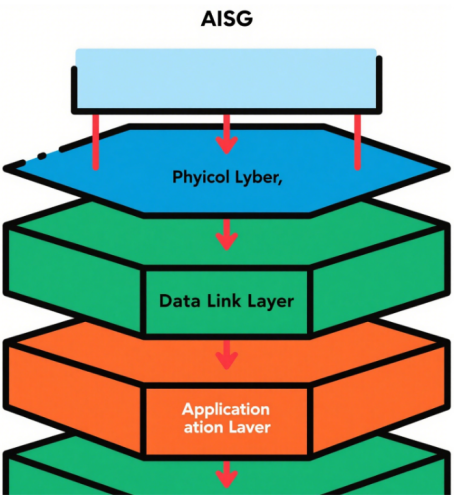
Figure 1
In the competitive landscape of Cross border e-commerce telecom sales, staying ahead of the curve is essential. AISG 2.0 - compliant products offer a plethora of advantages. For suppliers, it means broader market access as more and more operators seek interoperable solutions. Compatibility with different systems reduces the risk of product obsolescence and increases customer satisfaction.
For customers, whether they are mobile operators or system integrators, AISG 2.0 - enabled products simplify system setup and maintenance. The ability to remotely monitor and adjust antenna parameters, such as downtilt angles, not only improves network performance but also reduces operational costs.
In conclusion, the AISG 2.0 protocol is a driving force in the telecom antenna industry. As we look to the future, its continued evolution will surely bring even more innovative solutions, making it an exciting time for all stakeholders in the Cross border e-commerce telecom market.


